

Arab parties seek pivotal role as Israel faces coalition deadlock
Provisional election results leave Netanyahu and Eisenkot short of a majority, putting cooperation with Arab-led parties at the centre of government talks.
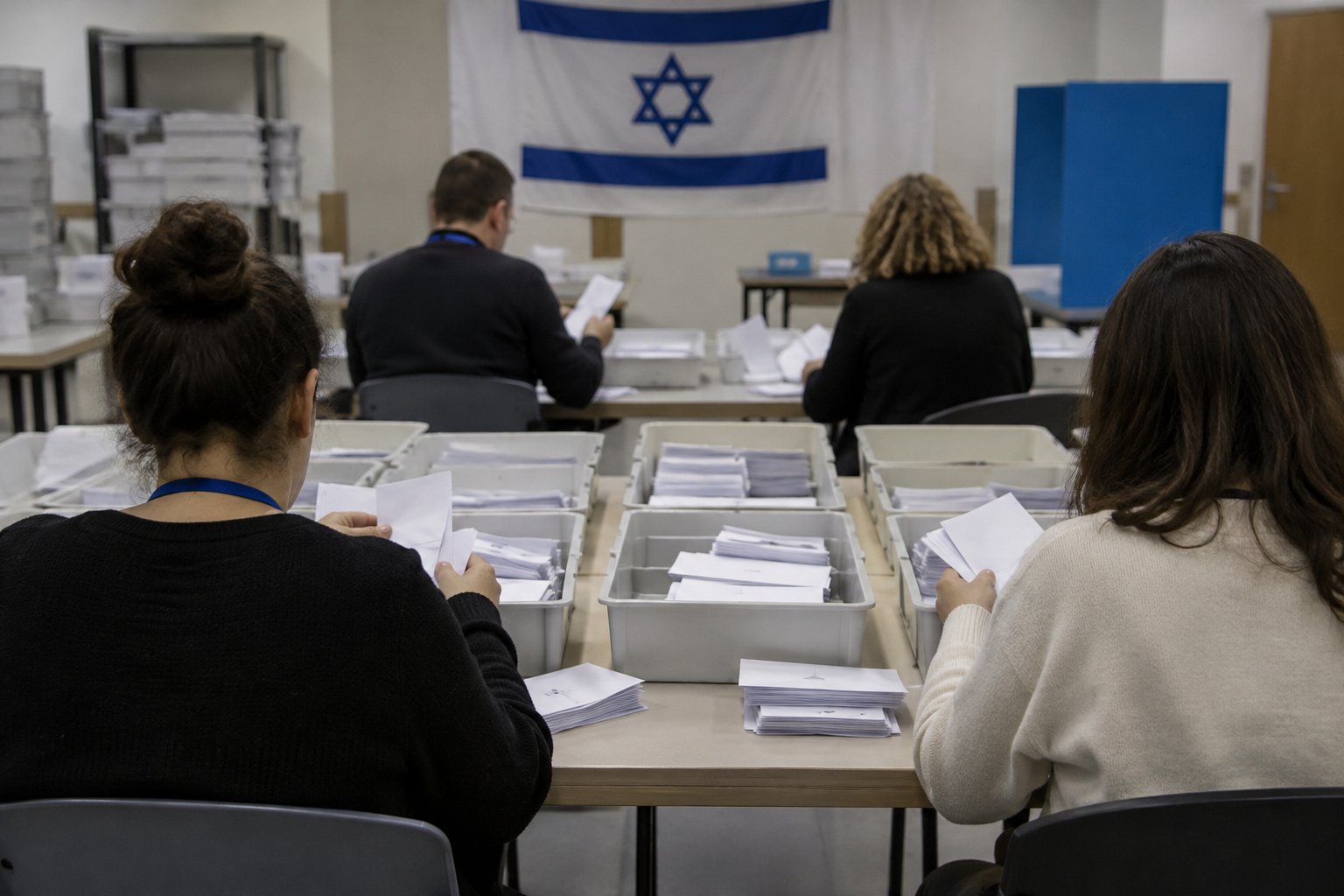
Israel’s Arab-led parties are seeking to help remove Prime Minister Benjamin Netanyahu after provisional election results left both his camp and the opposition bloc led by Gadi Eisenkot without a parliamentary majority, according to The National. With the final ballots still being counted on Wednesday, their increased representation could prove decisive in negotiations over the next government.
The National reported that the two rival blocs were each hovering around 50 seats in the 120-member Knesset, with Netanyahu’s camp slightly ahead. Arab parties were projected to secure about 18 seats, up from 10 at the previous election. Those figures remained provisional, with the remaining votes expected to be counted by Thursday.
Partnership becomes central question
Yousef Jabareen, leader of the Joint List, said his alliance was prepared to help bring down Netanyahu’s government and called for an equal partnership between Jewish and Arab Israelis, The National reported. Ahmad Tibi, head of the Arab Movement for Change, said Arab parties were willing to support an Eisenkot-led government but would not cooperate with Netanyahu.
The prospect faces resistance within the wider opposition. In its analysis, The Guardian reported that most Jewish opposition parties had rejected governing with Palestinian-led parties during the campaign. It said Eisenkot had not explicitly ruled out such cooperation, but had set conditions that made participation politically impossible for those parties.
Yair Golan, leader of the centre-left Democrats, publicly urged cooperation with Arab parties on Wednesday, according to both outlets. The National reported that Eisenkot said voters wanted change, without directly offering a partnership to Arab-led parties.
The distinction between the main opposition bloc and the broader group of Netanyahu’s opponents is important to the parliamentary arithmetic. While The National described Eisenkot’s bloc as short of a majority on its own, The Guardian’s analysis said the opposition collectively had a majority. Whether those parties can agree to govern together remains unresolved.
Higher turnout, unresolved allegations
Overall turnout reached 77.7 per cent, the highest since 1999, according to The National. It reported a sharp increase in participation in Arab communities, including voters who had previously boycotted elections. Israeli broadcasters estimated participation in those communities could have reached 80 per cent, but that figure was not presented as a final tally.
Netanyahu’s Likud party alleged bribery, intimidation and electoral fraud involving Arab parties and said evidence was being passed to police, The National reported. The supplied reports do not establish those allegations as fact.
President Isaac Herzog urged political parties on Wednesday to approach negotiations openly and avoid another early election, according to The National. The outlet said government formation could take weeks or months.
Options beyond a formal coalition
Arab parties could support a minority administration without formally joining its coalition, The National reported. The Guardian’s analysis pointed to an earlier precedent: Yitzhak Rabin’s reliance on Palestinian parties’ support for a minority government while pursuing negotiations over the Israeli-Palestinian conflict.
Netanyahu nevertheless retains routes to remaining in office. His Likud party was projected to be the largest individual party, according to The National. The Guardian’s analysis said continued opposition resistance to Arab-party cooperation could allow him to remain as caretaker prime minister, pursue another term or face a further election.
The uncertainty also coincided with weaker Israeli financial markets. The National reported that the shekel fell roughly 2 per cent against the dollar and Tel Aviv stocks declined 3 per cent. With no governing agreement reported and counting unfinished, the result had not yet determined who would lead Israel’s next administration.
Sources: The National; The Guardian, including its election analysis.

Correspondent
The MAUK News Briefing
A concise daily digest of verified reporting, analysis and perspective. No noise.
Comments (0)
No comments yet. Start the conversation.