

InternationalBREAKING
Iran–US Standoff Deepens as Houthis Escalate Regional Conflict; Hormuz Shipping and Gulf Security Under Pressure
Tehran says its mediation offer remains unanswered as Washington and Iran remain at odds over negotiations, while Houthi attacks and maritime security threats intensify concerns across the Middle East.
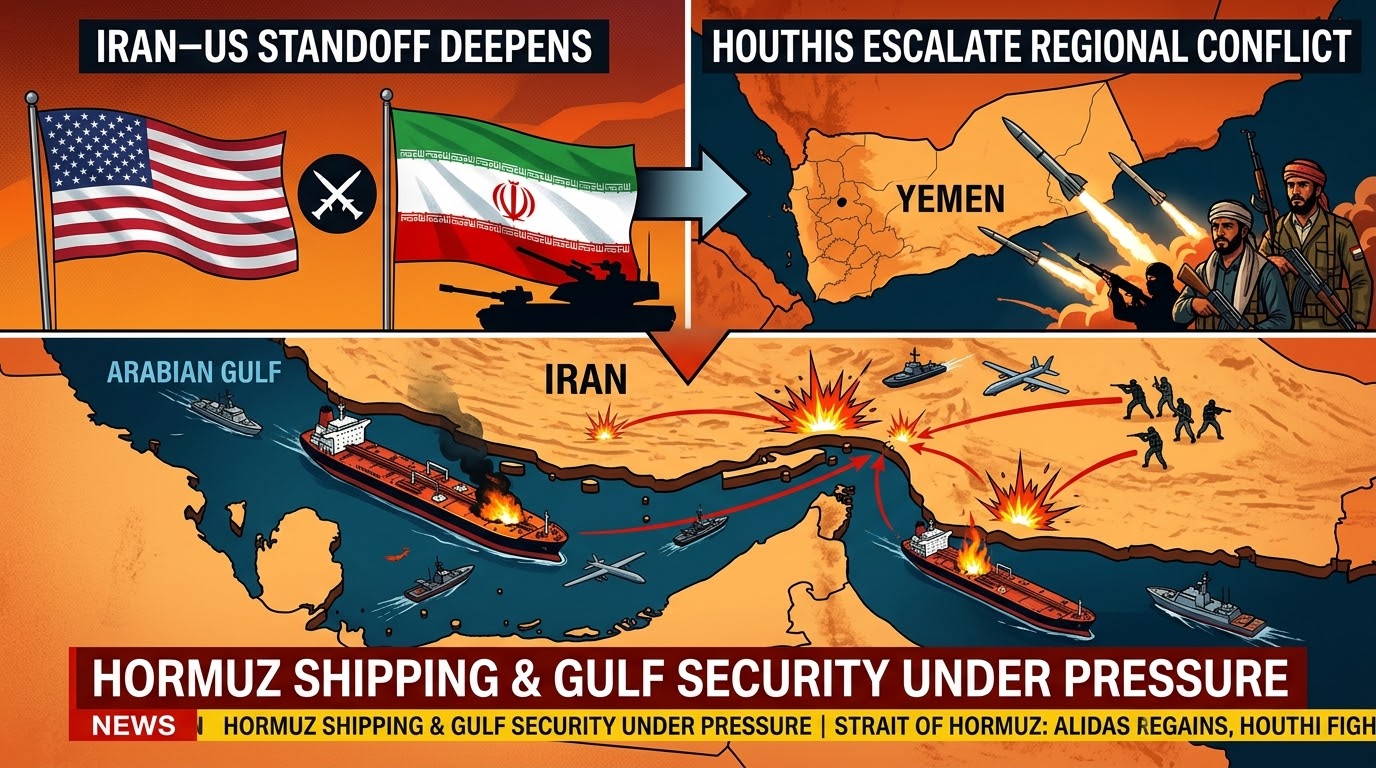
MIDDLE EAST | 21 OCTOBER 2026 — The confrontation involving Iran, the United States and Yemen’s Houthi movement continues to raise concerns about regional stability, maritime security and global energy supplies, as diplomatic initiatives struggle to make progress.
Iran’s mediation proposal remains unanswered
Iranian Foreign Minister Abbas Araghchi has said Tehran has not received a response from Saudi Arabia or Yemen’s Houthi movement to an Iranian offer to help facilitate talks aimed at ending their fighting. The comments, reported by Reuters on October 20, came as Houthi attacks on Saudi targets and Saudi-backed military operations in Yemen heightened tensions.
Araghchi also cautioned that foreign military intervention could complicate the situation, amid discussions about possible Egyptian support for Saudi Arabia’s security. The diplomatic initiative highlights Iran’s attempt to position itself as a mediator even as its relationship with the Houthis and the wider regional conflict remain major sources of concern. The parties’ responses and the prospects for negotiations remain uncertain.
Washington and Tehran remain at odds
The United States and Iran continue to face significant disagreements over the terms for ending the conflict and restoring normal maritime movement. Recent reporting indicates that negotiations have stalled, with Washington maintaining restrictions on Iranian shipping and Tehran asserting that the Strait of Hormuz cannot return to normal operations without its conditions being addressed.
The Strait of Hormuz is a vital international passage for oil and liquefied natural gas shipments. Any sustained disruption could affect energy prices, shipping insurance, freight costs and economies that depend heavily on imported fuel.
Houthi conflict adds to regional concerns
Yemen’s Houthi movement, aligned with Iran, has intensified its confrontation with Saudi Arabia and Saudi-backed forces. Reuters reported on October 14 that the group had threatened further attacks on Saudi airports and oil facilities. Separately, the Associated Press reported on October 20 that a Houthi missile strike on a residential area in Taiz killed two teenage girls and injured six people.
The fighting also carries serious humanitarian consequences. Continued attacks in populated areas, restrictions on supply routes and damage to infrastructure can impede access to food, medical care and essential services in a country already affected by years of conflict.
Maritime security and energy markets in focus
The risks extend beyond the immediate conflict zones. The Strait of Hormuz and the Bab el-Mandeb Strait near Yemen are strategically important for international shipping. Threats to either route can force vessels to reconsider their passage, increase operating costs and unsettle energy markets.
Reuters reported on October 21 that oil prices had risen amid renewed concerns about Middle East supply disruptions. Market movements remain sensitive to developments in maritime security, diplomatic negotiations and the risk of further attacks.
What happens next?
The immediate outlook will depend on whether Iran, the United States, Saudi Arabia and the Houthis can establish a credible diplomatic channel, reduce attacks and protect commercial shipping. Further military escalation could widen the conflict and increase risks to civilians, regional economies and international trade. Renewed negotiations and verifiable de-escalation measures could help reduce those risks.
For now, the situation remains fluid. Statements from the parties involved, independent reporting and official maritime and security advisories will be important in assessing what happens next.
Editorial note: This report synthesises media coverage available on 21 October 2026. Claims made by governments and parties to the conflict should be treated as attributed statements unless independently verified. Casualty figures and operational developments may change as further information emerges.

MAUK News
Correspondent
The MAUK News Briefing
A concise daily digest of verified reporting, analysis and perspective. No noise.
Comments (0)
No comments yet. Start the conversation.