

Israel election count continues as exit polls leave both blocs short
Projections suggest neither Netanyahu nor Eisenkot has a majority, with Arab parties potentially pivotal to coalition talks.
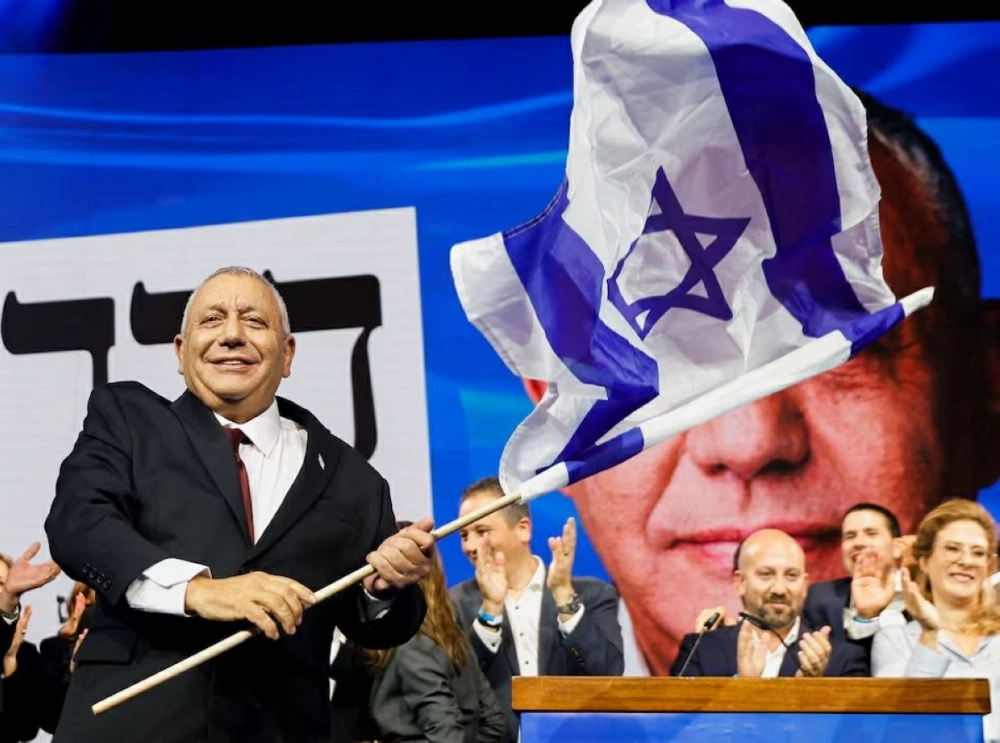
London | 28-10-2026 : Israel faced an uncertain route to a new government on Wednesday, 28 October, as votes were counted following an election that exit polls suggested had delivered no clear winner. According to BBC News and the Guardian, neither Benjamin Netanyahu’s governing bloc nor the opposition grouping led by Gadi Eisenkot was projected to reach the 61 seats needed for a majority.
The forecasts remained provisional and differed between broadcasters. BBC News reported that updated polls from Kan and Channel 13 put the two blocs level on 51 seats each in the 120-seat Knesset. Channel 12 instead projected 52 seats for Netanyahu’s bloc and 49 for Eisenkot’s.
The Guardian’s later coverage also described a 51-seat tie, while cautioning that Israeli exit polls are frequently revised and can differ from the final count by several seats. Earlier forecasts had given Eisenkot’s grouping a narrow advantage.
Counting continues after high turnout
Turnout reached 77.7% when voting closed at 10pm on Tuesday, the highest figure at that hour since 1999, according to Central Elections Committee figures reported by BBC News. The Guardian reported that participation was about seven percentage points higher than in 2022.
More than 30% of votes had been tabulated in the Guardian’s Wednesday morning coverage. BBC News reported that an estimated 600,000 absentee ballots, mostly cast by military personnel and representing around a tenth of all votes, would not be fully counted until Thursday.
Both leaders nevertheless presented the forecasts as grounds for claiming victory. According to BBC News, Eisenkot promised to turn the result into a stable government, while Netanyahu called for a strong right-wing administration. Likud was projected to remain the largest individual party in parliament.
Arab parties could shape coalition negotiations
The Arab parties’ projected gains could prove central to efforts to assemble a government. The forecasts cited by the two outlets varied: BBC News reported a combined 18 or 19 seats, while the Guardian’s coverage put their potential representation at 17 to 18, compared with 10 previously. Those figures are projections, not confirmed results.
BBC News reported that United Arab List leader Mansour Abbas hoped his party and Eisenkot’s Change Bloc could together reach 61 seats. Joint List chairman Yousef Jabareen argued that his grouping would have to be considered in any political arrangement.
According to the Guardian, experts said Eisenkot could need negotiations with the Joint List and Ra’am to form a government. The outlet also identified a minority administration sustained by informal, vote-by-vote agreements as another possibility. Netanyahu, by contrast, told supporters that a government dependent on Palestinian parties should not be formed, the Guardian reported.
A potentially lengthy path to government
Once results are confirmed, Israel’s president will consult political factions and invite the leader judged most likely to succeed to attempt to form a coalition, according to BBC News. Negotiations could last weeks; if the process ultimately fails, another election would be required.
BBC News described Tuesday’s vote as the first general election since the Hamas-led attacks of 7 October 2023 and the subsequent wars in Gaza, Lebanon and Iran. Campaign issues included responsibility for the security failures surrounding the attacks, the conduct of those wars, military service obligations, judicial reforms and Israel’s international standing.
The immediate outcome remains unresolved. With counting unfinished and broadcaster projections differing, neither bloc’s eventual parliamentary strength nor a workable governing arrangement has been established.
Sources: The Guardian; BBC News.

Correspondent
The MAUK News Briefing
A concise daily digest of verified reporting, analysis and perspective. No noise.
Comments (0)
No comments yet. Start the conversation.