

Israel election unresolved as exit polls point to coalition deadlock
Neither Benjamin Netanyahu nor challenger Gadi Eisenkot appears on course for a majority, with Arab parties potentially pivotal to coalition talks.
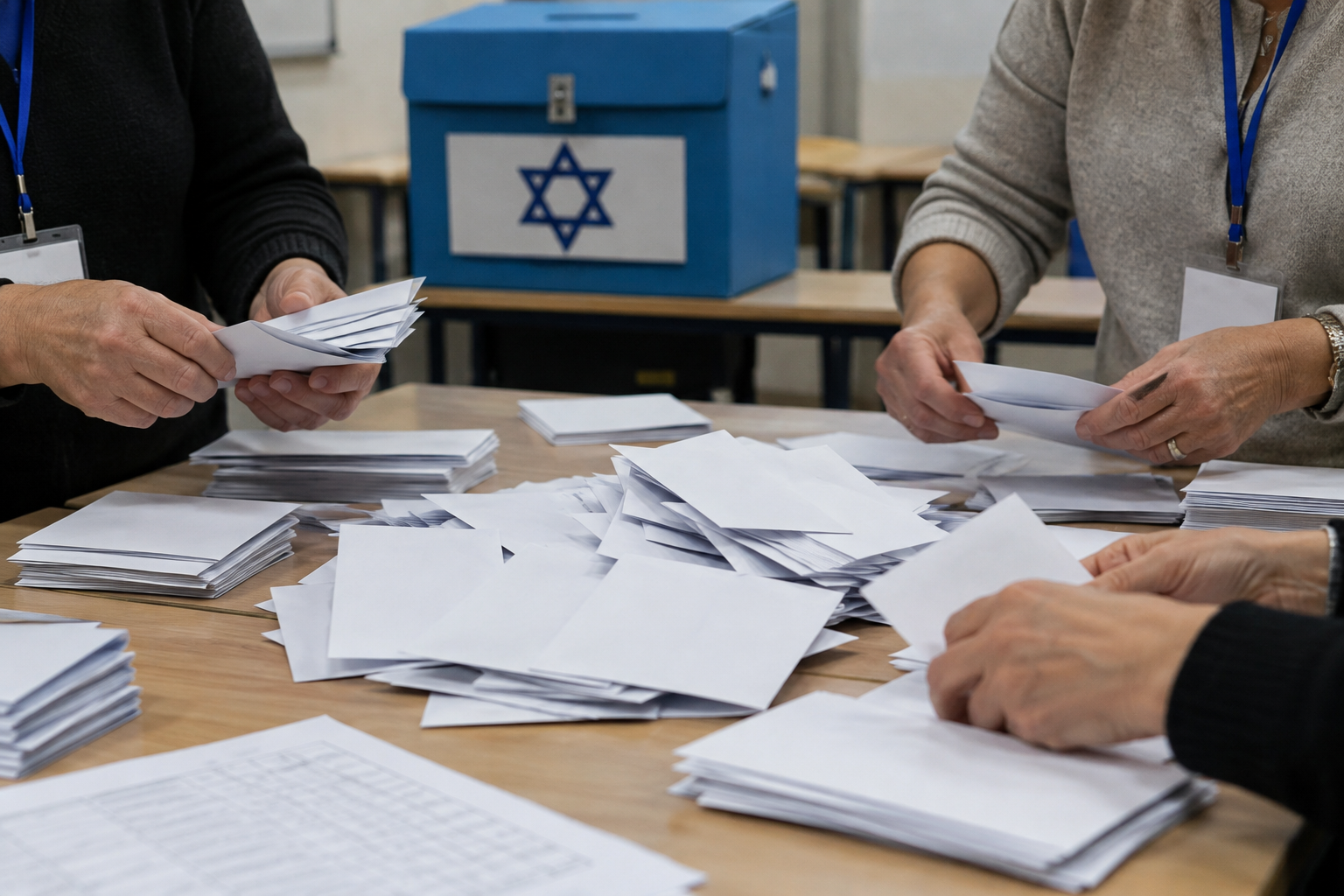
London | 28-10-2026 : Israel’s election remained unresolved as votes were counted, with exit polls indicating that neither Prime Minister Benjamin Netanyahu nor former military chief Gadi Eisenkot was on course to secure a parliamentary majority, according to BBC News. The preliminary picture points to difficult negotiations over the next government rather than an immediate decision on who will lead it.
The Guardian reported that Tuesday evening’s projections gave the opposition bloc led by Eisenkot a narrow advantage over Netanyahu’s right-wing and far-right coalition. Netanyahu’s Likud was nevertheless projected to remain the largest individual party. Those findings are exit-poll estimates, not final election results.
A difficult route to government
According to the Guardian, both Likud and Eisenkot’s Yashar party appeared to face obstacles to assembling a majority in the 120-seat Knesset. The newspaper said the outcome could trigger weeks of negotiations before a prime minister is confirmed, or lead to another election.
Israeli Arab parties were projected to win as many as 18 seats, potentially giving them a decisive role in coalition discussions, the Guardian reported. Eisenkot could theoretically build a majority with their participation, but he ruled out forming a government with them before the vote.
The deadlock could also allow Netanyahu to remain in office in a caretaker capacity, according to the Guardian. A projected advantage for the opposition therefore does not, on its own, establish that a change of prime minister will follow.
Opposition leaders nevertheless presented the projections as a rejection of Netanyahu. The Guardian reported that former prime minister Yair Lapid characterised the result as a major defeat for the incumbent’s bloc. Eisenkot also interpreted the exit polls as a rejection of Netanyahu, while making his assessment conditional on the final results matching the projections.
Heavy turnout and disputed allegations
The Guardian described turnout as the highest in 50 years and reported record participation by Israeli Arab voters. More than seven million people were eligible to vote, and participation had reached 77.1% by 6pm, according to the newspaper.
Voting was heavy in cities including Tel Aviv and Haifa, with queues reported at some polling stations. The Guardian also described strong participation in Israeli Arab towns, many of which have a history of election boycotts, and increased voting among serving military personnel.
Before voting ended, Netanyahu and several other parties sought to extend polling beyond the 10pm deadline. The Central Elections Committee rejected that request, the Guardian reported.
Netanyahu also alleged that the left and Arabs were attempting to steal the election. According to the Guardian, the committee rejected the allegation and said it had found no evidence of systematic tampering. Eisenkot accused Netanyahu of preparing the ground to dispute the outcome.
A vote with regional significance
BBC News described the contest as one that many Israelis regarded as among the most pivotal in the country’s history. Its pre-election coverage highlighted questions over the rivals’ foreign policies and their approaches to Gaza and the occupied West Bank.
The Guardian placed the election against a backdrop of three years of conflict, instability and increasing international isolation for Israel. For now, however, the central uncertainty remains parliamentary: whether the final count will give either camp a workable route to government, or leave the country facing prolonged negotiations.
Sources: The Guardian; BBC News.

Correspondent
The MAUK News Briefing
A concise daily digest of verified reporting, analysis and perspective. No noise.
Comments (0)
No comments yet. Start the conversation.