

Cybersecurity agencies issue joint advisory on supply-chain intrusions
Advisory describes techniques used to compromise software update channels
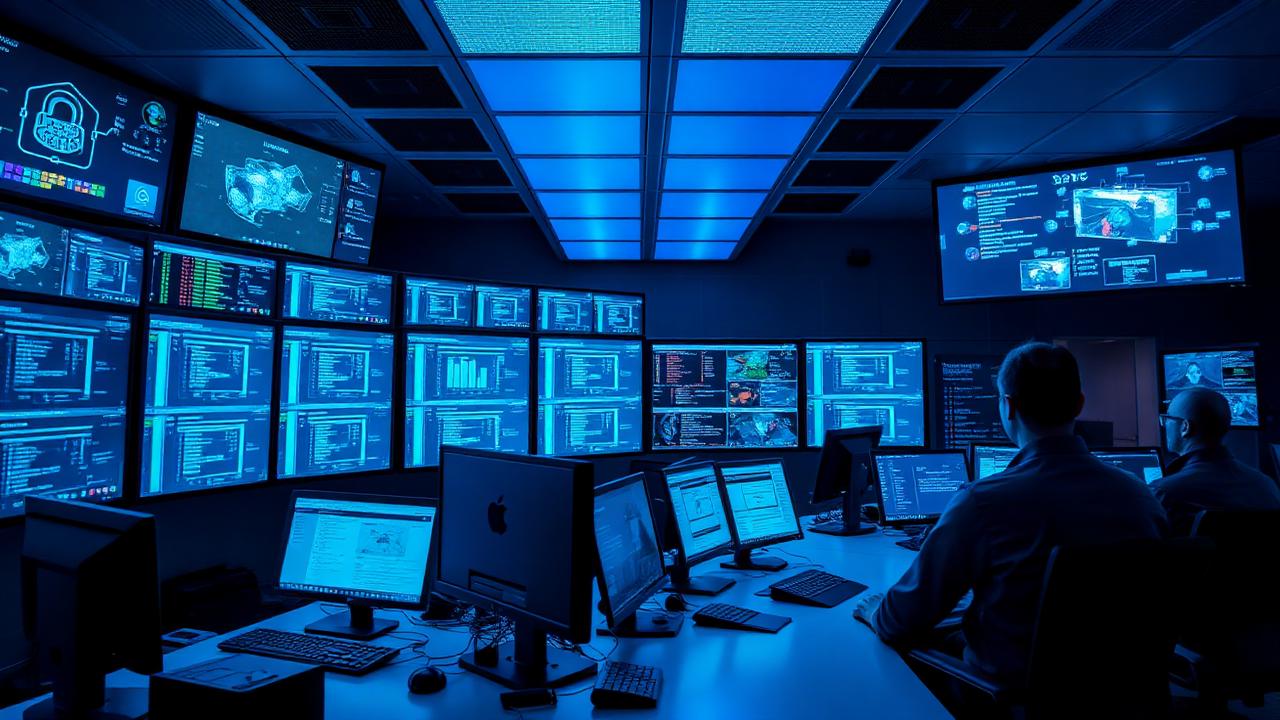
Cybersecurity authorities are intensifying international efforts to combat a growing class of attacks in which threat actors compromise trusted suppliers, software providers, managed service providers (MSPs) or other third parties to gain access to their ultimate targets.
The latest warnings underscore a fundamental shift in the cyber threat landscape: organizations can no longer assess their cybersecurity exposure solely by examining their own networks. Increasingly interconnected digital ecosystems mean that weaknesses in a supplier or service provider can become an entry point into multiple customer environments.
Supply chains becoming an attractive target
In a traditional cyberattack, threat actors may attempt to compromise an organization directly through phishing, exposed systems, stolen credentials or software vulnerabilities. Supply-chain attacks provide an alternative route by allowing attackers to exploit an organization indirectly through a trusted third party.
Cybersecurity agencies have previously highlighted incidents involving compromised software and IT service providers, demonstrating how a single intrusion can cascade across numerous organizations. High-profile incidents such as SolarWinds and Kaseya illustrated the potential scale of this threat, where attackers leveraged trusted technology or service relationships to reach downstream customers.
Managed service providers are particularly significant because they may possess privileged administrative access to the networks, systems and applications of multiple customers. A successful compromise of one provider can therefore potentially expose a much larger group of organizations.
International cooperation takes center stage
The joint approach reflects increasing cooperation among national cybersecurity organizations, including agencies from the United States, United Kingdom, Australia, Canada and New Zealand. International authorities have repeatedly emphasized that supply-chain resilience requires coordinated action between governments, technology providers, service providers and their customers.
Such cooperation enables agencies to share threat intelligence, technical indicators, attack techniques and defensive recommendations more rapidly, helping organizations identify malicious activity before an intrusion develops into a major incident.
The agencies' warnings also reinforce the importance of maintaining visibility into third-party relationships and understanding exactly what access suppliers have to corporate environments.
Organizations urged to strengthen third-party security
Security teams are being encouraged to take a more comprehensive approach to supplier risk. Organizations should maintain an up-to-date inventory of critical suppliers and understand which vendors have access to sensitive systems, applications and data.
Among the key defensive measures are:
- Review third-party access: Regularly examine accounts, permissions and remote-access mechanisms provided to suppliers and service providers.
- Enforce strong authentication: Require phishing-resistant multi-factor authentication wherever technically possible, particularly for privileged and remote-access accounts.
- Apply least-privilege principles: Vendors should receive only the access required to perform their contractual responsibilities.
- Monitor supplier activity: Security teams should establish logging and monitoring for administrative actions, authentication events and unusual network activity associated with third parties.
- Remove unnecessary accounts: Dormant or obsolete supplier accounts should be disabled or deleted promptly.
- Strengthen contractual requirements: Security responsibilities, incident-reporting obligations, access controls and minimum cybersecurity standards should be clearly defined in supplier agreements.
- Prepare for supplier compromise: Organizations should have documented procedures for rapidly restricting or terminating third-party access if a supplier is breached.
- Maintain visibility beyond Tier 1 suppliers: Where appropriate, organizations should understand critical dependencies deeper within their technology and service supply chains.
A risk that extends beyond IT departments
The implications of supply-chain intrusions extend beyond cybersecurity teams. A compromised supplier can potentially affect business continuity, sensitive information, customer data, operational technology and critical infrastructure.
Government cybersecurity agencies have previously warned that sophisticated threat actors can maintain persistent access to compromised environments for extended periods. In critical-infrastructure environments, such access can present particularly serious risks because IT compromises may ultimately affect operational technology and industrial control systems.
This makes supply-chain security a business-resilience issue as much as a technical security issue.
From trust to verification
One of the most important lessons emerging from recent supply-chain incidents is that trusted relationships should not automatically translate into unrestricted technical access.
Organizations are increasingly adopting a "verify, then trust" approach, combining identity verification, continuous monitoring, least-privilege access and segmentation to reduce the potential impact of a compromised supplier.
Security leaders are also being encouraged to engage suppliers in regular security discussions rather than treating cybersecurity requirements as a one-time procurement exercise.
The road ahead
As businesses increasingly depend on cloud platforms, software-as-a-service providers, outsourced IT operations, open-source components and interconnected digital services, the supply chain will remain an attractive target for sophisticated threat actors.
The joint warnings from cybersecurity authorities therefore serve as a reminder that defending an organization requires visibility across its wider digital ecosystem.
For businesses, the priority is clear: identify critical dependencies, minimize unnecessary third-party access, continuously monitor trusted connections and prepare for the possibility that a trusted supplier could itself become compromised.
In an increasingly interconnected digital economy, supply-chain security is no longer simply a vendor-management responsibility. It is a fundamental component of organizational cybersecurity and resilience.
Technology Correspondent
The MAUK News Briefing
A concise daily digest of verified reporting, analysis and perspective. No noise.
Comments (0)
No comments yet. Start the conversation.